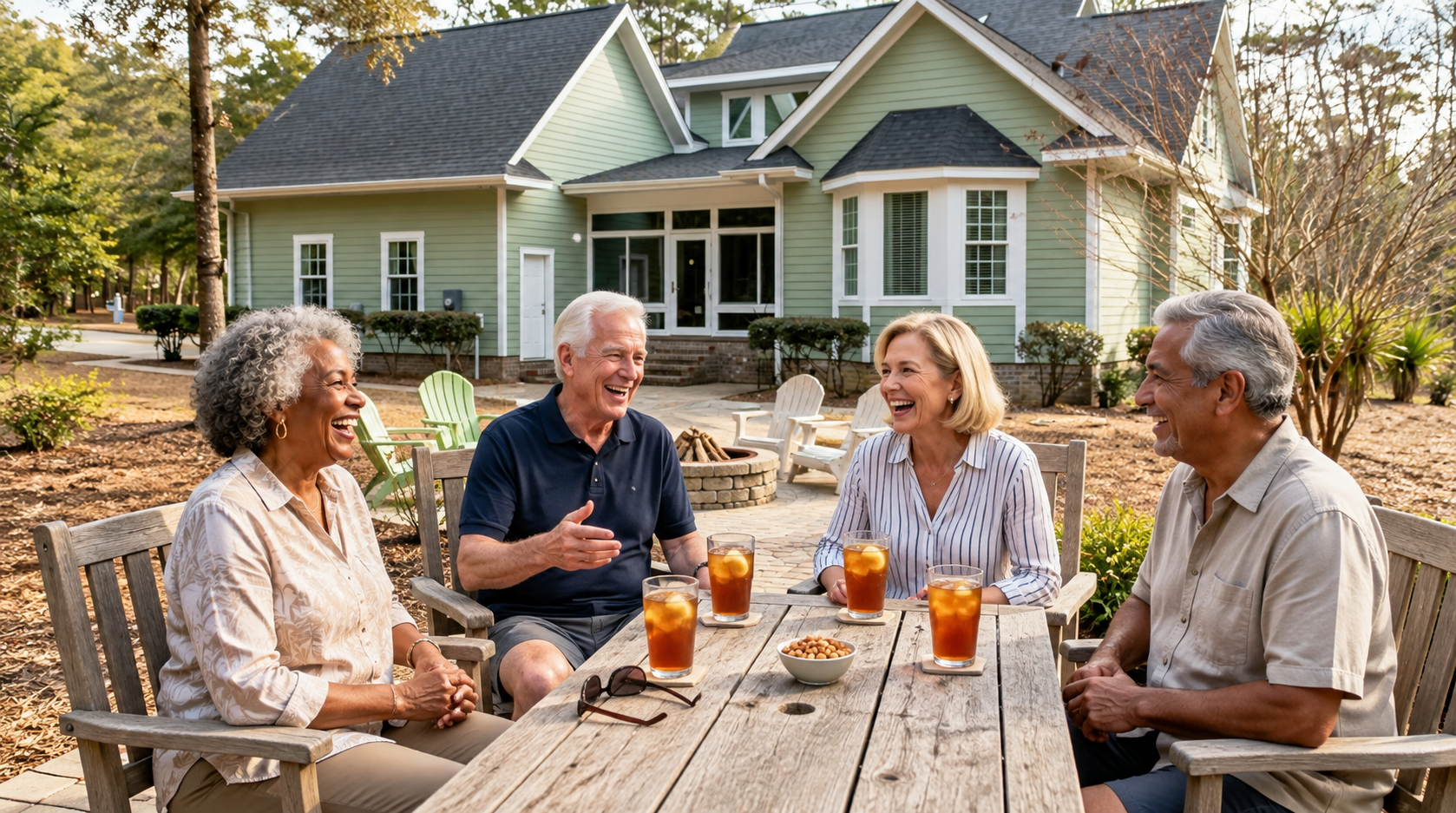
A great retirement community social life is the thing most people worry about before a move to the coast, and the worry we hear most often is not about the house or the paperwork. It is a quieter one: will I actually make friends here? If you have wondered the same thing, you are in good company, and the good news is that it is far easier than you fear. This is our practical, been-there guide to building a real retirement community social life after you move, drawn from years of helping retirees settle into Coastal NC communities.
What This Article Answers
Here is the single most reassuring thing to know: in Coastal NC's active adult communities, almost everyone is from somewhere else. Buyers arrive from the Northeast, the Midwest and beyond, which means being new is the norm, not the exception. There is no decades-old clique to break into, because most of your neighbors were unpacking boxes just a year or two ago themselves. That shared experience makes people genuinely welcoming.
It helps that these communities are designed around connection. Many have dozens of clubs and interest groups, packed event calendars and amenities built for gathering. In other words, the infrastructure for a retirement community social life is already there. Your job is simply to step into it. If you are still choosing where to land, our 55+ Communities guide is a good place to compare how active each community's social scene is.
The friendliest thing you can do for future-you is to begin connecting before the moving truck arrives.
The single best strategy for the first three months is simple: show up. Accept the invitation to coffee even when you are tired. Go to the newcomer mixer. Try the class you are only half sure about. Early on, quantity matters more than quality, because you are casting a wide net to find the handful of people who will become your real friends. You can always narrow later. Momentum in those first weeks is what turns a new address into a home, and it is the foundation of any lasting retirement community social life.
Shared activities are the easiest way to meet people, because the conversation is built in. You do not have to make small talk from nothing when you are both chasing a pickleball or waiting on the first tee.
Beyond the amenities, the clubs are where deeper friendships form, because they gather people who already share what you love. Whatever your thing is, there is very likely a group for it. If there is not, start one, and you will be amazed who shows up. Here is how a retirement community social life can look for different personalities:
| If you are... | Easy first steps |
|---|---|
| Outgoing and social | Host a small porch happy hour, join the welcome committee and hit the clubhouse events |
| More reserved | Pick one recurring activity, a class or a club, where you see the same faces every week |
| Active and outdoorsy | Pickleball, golf, group walks, fitness classes, and kayaking or boating meetups |
| Hobby-driven | Find the club for your interest: cards, books, gardening, wine, crafts, boating or photography |
| Faith-oriented | Visit local churches or faith groups; many host newcomer gatherings and small groups |
| Looking for purpose | Volunteer locally; shared purpose tends to build the fastest, deepest friendships of all |
If there is one thing to hold onto, it is patience. Friendships have their own timeline, and a few quiet weeks early on are not a verdict on your new life. Most people find that somewhere around the three-to-six-month mark, the casual hellos have quietly turned into real plans, standing coffee dates, and a golf or card group that saves you a seat. Keep showing up, keep saying yes, and give the place a full season before you judge how it feels. It almost always comes together.
Start by showing up. Join one recurring activity, accept invitations during the first ninety days, and introduce yourself first. Nearly everyone in these communities is also a transplant, so neighbors are usually eager to connect.
Usually it is easier than people expect. Most residents moved from somewhere else, clubs and amenities create built-in conversation, and events fill the calendar. Friendships typically solidify around three to six months with consistent participation.
Shared, repeating activities work best: pickleball, golf, water aerobics, fitness classes and interest clubs. Seeing the same faces every week turns acquaintances into friends faster than occasional big events do.
Pick one recurring class or club and keep going. Familiar faces and a shared activity take the pressure off small talk, and you can add more commitments gradually as you get comfortable.
Yes. Join the community's resident Facebook group, attend a social or club meeting while house-hunting, and introduce yourself to future neighbors on move-in day. Those early connections make the first weeks much easier.
Let's Find the Community That Fits Your Kind of Social.
Some communities buzz with clubs and events; others are quieter and more low-key. We know the personality of each one, and we can match you to the place where your retirement community social life will feel like home fastest. Browse our 55+ Communities guide or grab the free Coastal Guide Book, and we'll help you find your people as well as your house.
Or meet the team who will help you settle in, not just move in.
This is general information. Club offerings, amenities and events vary by community, so confirm details with each community before you decide.
 Best pickleball communitiesWhere the courts and the crowds are.
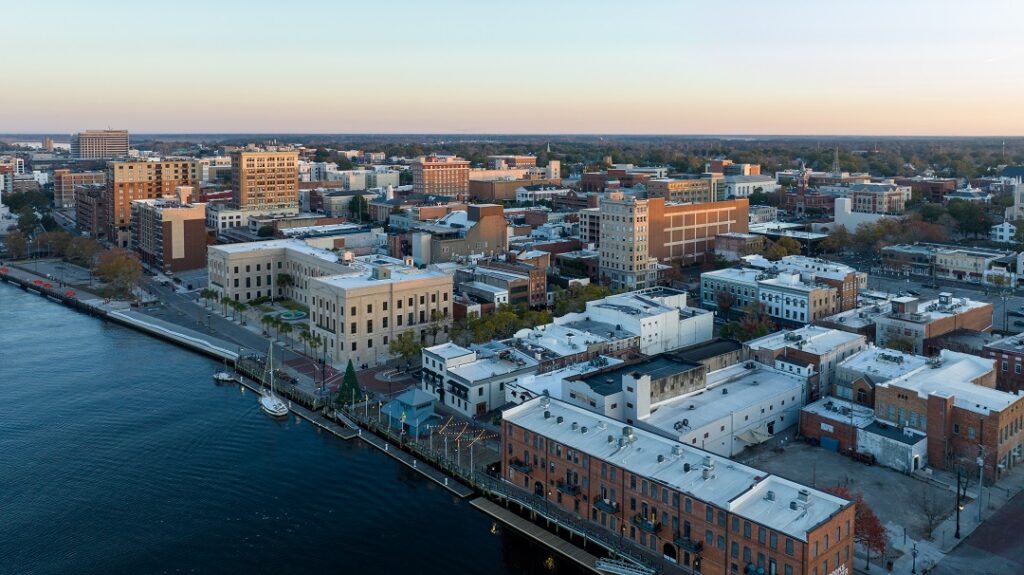 7 best 55+ communitiesOur picks for Wilmington in 2026.
 Is Brunswick Forest right for you?An honest look at life there.
Whether you're just starting to explore or ready to make a move, we're here to help you figure out the next step.