How much money do I need to buy a home in North Carolina?
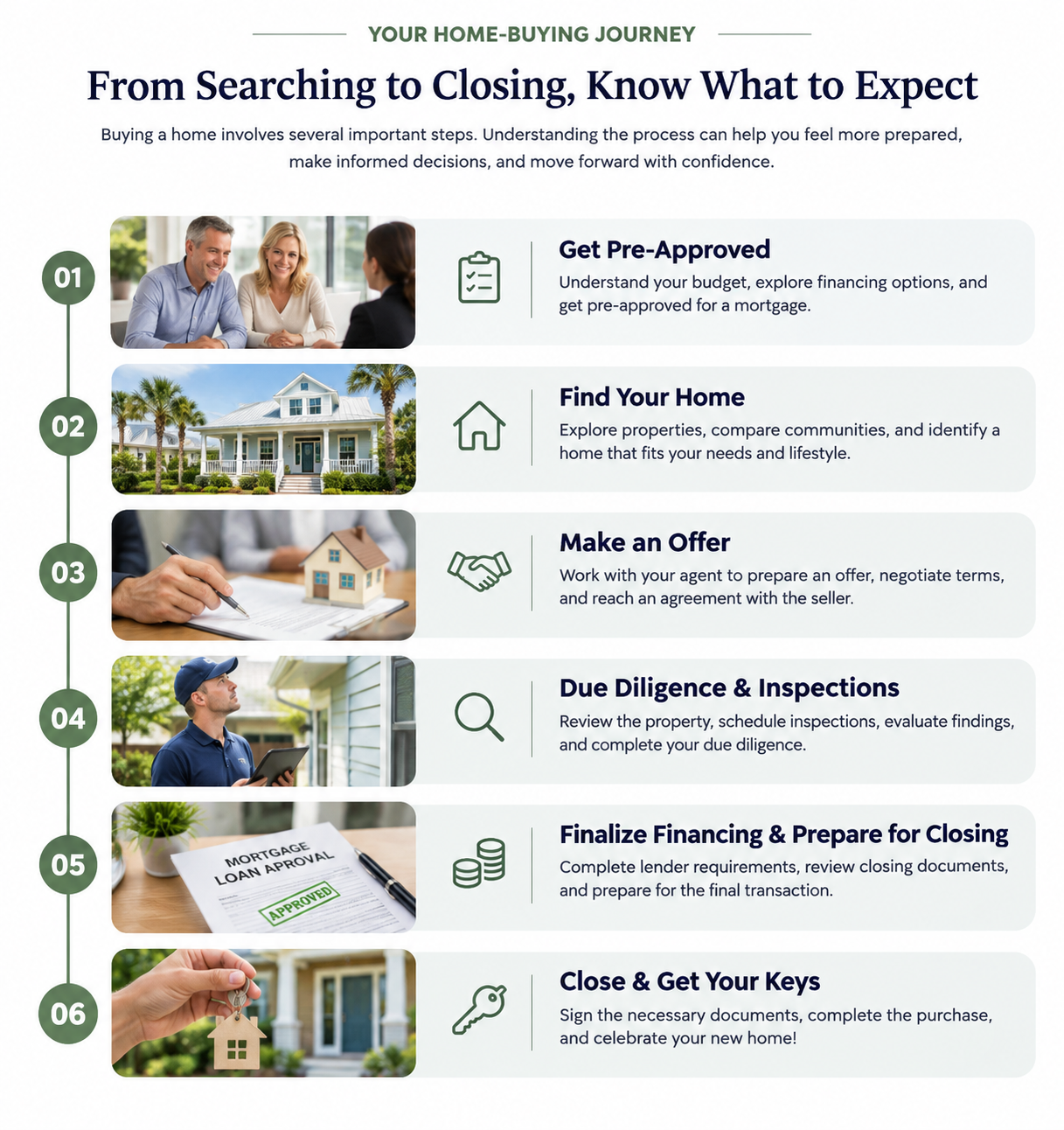
The amount varies based on the home's price, loan program, down payment, closing costs, and any negotiated expenses. Some loan programs allow lower down payments, while buyers should also budget for inspections, appraisal, prepaid expenses, and reserves. A lender can help estimate the funds you'll need for your situation.
What is the difference between due diligence fees and earnest money?
In many North Carolina purchase contracts, the due diligence fee is paid to the seller for the negotiated due diligence period, while earnest money is a deposit held by the escrow agent and credited at closing if the sale completes. Their treatment can differ if a contract terminates, so review the agreement with your agent and closing attorney.
Do I need a mortgage pre-approval before viewing homes?
A pre-approval is not always required to tour a home, but it is a useful early step. It helps clarify a comfortable price range, identify financing questions, and strengthen an offer when you are ready to buy.
How long does the home-buying process typically take?
The timeline depends on the property, financing, contract terms, inspections, appraisal, title work, and closing coordination. Once an offer is accepted, many financed purchases close in roughly 30 to 45 days, but timelines vary.
Do I need a real estate attorney in North Carolina?
North Carolina real estate closings are typically handled by a licensed North Carolina attorney, who coordinates title examination, closing documents, and disbursement. Your agent can help coordinate with the closing attorney selected for the transaction.
What happens during the due diligence period?
The due diligence period is the negotiated time for the buyer to investigate the property and decide whether to proceed under the contract terms. Buyers commonly arrange inspections, review disclosures and restrictions, confirm insurance availability, and evaluate financing and property condition.
Should I get a home inspection before purchasing?
A professional home inspection is a valuable way to learn about a property's condition. Depending on the home, you may also consider specialized inspections, such as pest, roof, septic, well, HVAC, or moisture evaluations.
What should I know about buying a home in a coastal or flood-zone area?
Review flood maps, elevation information, insurance availability and costs, drainage, wind and storm exposure, and any community or property maintenance requirements. Confirm details with qualified insurance, inspection, and local professionals before your due diligence period ends.