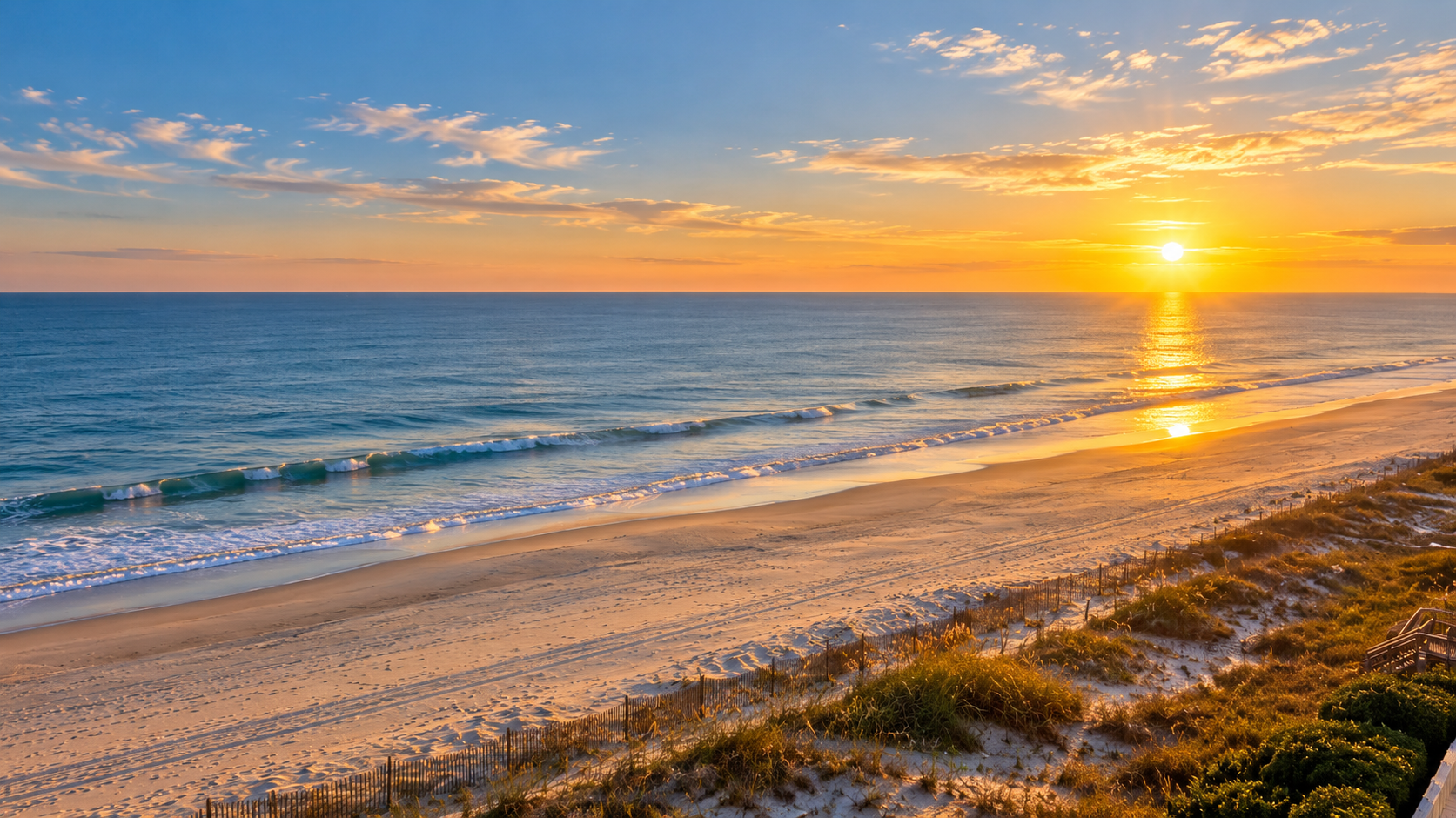
Coastal NC weather is the question we hear most from retirees right after taxes: what is it really like year round? The short answer is a mild, four-season climate that lets you live outdoors most of the year, with hot, humid summers as the main trade-off and a hurricane season worth planning around. Here is the honest, month-by-month picture of Coastal NC weather so you know exactly what you are signing up for.
What This Article Answers
Wilmington and the surrounding coast sit in a humid subtropical climate. In practice that means four real seasons, but far milder than the Northeast or Midwest most transplants are leaving. The ocean moderates the temperature, keeping winters gentle and summers a touch cooler at the coast than inland. Snow is essentially a non-event, averaging about an inch a year, and many winters see none at all. The trade-off is humidity: summer afternoons feel sticky, and quick thunderstorms are common. Overall, Coastal NC weather delivers around 150 comfortable days a year, which is a big part of the appeal for active retirees.
Here are the approximate average high and low temperatures for the Wilmington area, based on long-term climate normals. Coastal towns like Southport, Oak Island and the beaches run within a few degrees of these.
| Month | Avg High | Avg Low | What it feels like |
|---|---|---|---|
| January | 57 F | 37 F | Cool and crisp; light jacket weather, rare freezes |
| February | 60 F | 39 F | Mild days, chilly nights; the calm before spring |
| March | 66 F | 45 F | Spring arrives; comfortable and breezy |
| April | 74 F | 53 F | Near-perfect; blooms everywhere, low humidity |
| May | 81 F | 62 F | Warm and lovely; beach season begins |
| June | 87 F | 70 F | Hot and humid; afternoon storms possible |
| July | 90 F | 74 F | Peak heat and humidity; warm ocean, frequent storms |
| August | 88 F | 73 F | Hot and sticky; wettest stretch of the year |
| September | 84 F | 68 F | Still summery; warm ocean, peak hurricane watch |
| October | 76 F | 57 F | Arguably the best month; warm days, cool nights |
| November | 68 F | 47 F | Crisp and pleasant; great for golf and walks |
| December | 60 F | 40 F | Mild winter; occasional cold snaps, little to no snow |
Spring is when Coastal NC shows off. Temperatures climb from the 60s into the 80s, humidity stays low, and gardens and azaleas burst into color. It is arguably the most comfortable stretch of the year, ideal for golf, walking and getting out on the water before the summer heat settles in. Many locals will tell you April is close to perfect.
Summer is the season to be honest about. Highs sit around 90 degrees with high humidity, and afternoon thunderstorms roll through regularly, though they often pass quickly. The upside is a warm Atlantic, with ocean temperatures climbing into the low 80s, and long daylight hours for evenings on the water. It is the wettest, stickiest stretch of the year, but that is what air conditioning, morning tee times and the nearby beaches are for.
Fall may be the region's best-kept secret. September and October keep warm, summery days while the humidity eases and the summer crowds thin out. The ocean stays swimmable well into October, and by November the air turns crisp and golden, perfect for golf and long walks. The one caveat: September is both one of the wettest months and the heart of hurricane season, so keep an eye on the tropics.
Winter is why so many people move here. Highs generally sit in the upper 50s to low 60s, and while nights can dip near freezing, hard freezes are uncommon and snow is rare. Plenty of winter days are sunny and mild enough for golf, a beach walk or lunch on a patio. For anyone escaping northern winters, Coastal NC weather feels less like winter and more like a long, gentle shoulder season.
No honest guide to Coastal NC weather skips hurricanes. Atlantic hurricane season runs June 1 through November 30, with peak activity from mid-August through October. The region does get storms, and it has seen major ones, but most years pass without a direct hit, and homes here are built to modern coastal codes designed for high winds. The practical takeaway for buyers is not to be scared off, but to plan: understand your flood zone, budget for wind and flood insurance, and choose a well-built home at a sensible elevation. Our guide to living in Southport touches on the same coastal realities.
Weather is one piece of the relocation picture. Pair this with our guide to North Carolina property taxes for retirees and our guide to healthcare in Coastal NC to see the full cost-and-lifestyle math.
Wilmington has a mild, humid subtropical climate with four seasons. Winters are short and gentle (January highs near 57 degrees), summers are hot and humid (July highs near 90), and spring and fall are comfortable. Snow is rare, and the area sees roughly 150 comfortable days.
Very rarely. Wilmington averages only about an inch of snow a year, and many winters see none at all. When snow does fall, it is usually light and melts quickly, so it rarely disrupts daily life or travel.
Spring (roughly April and May) and fall (September through November) are the most comfortable, with warm days, cooler nights and lower humidity. October is a local favorite. These shoulder seasons are ideal for golf, walking and time on the water.
Summer highs average around 90 degrees from June through August, with high humidity and frequent afternoon thunderstorms. The ocean warms into the low 80s, which makes the beach a welcome escape. Mornings and evenings are the most comfortable times to be outside.
Hurricane season runs June through November, peaking from mid-August through October. Most years pass without a direct hit, and homes are built to modern coastal codes. The smart approach is preparation: know your flood zone, carry appropriate insurance, and choose a well-built home.
Nearly. With mild winters and around 150 comfortable days a year, golf, pickleball and walking are possible in every season. Only the occasional cold snap or summer thunderstorm interrupts play, which is a major draw for active retirees.
Ready to Trade Snow Shovels for Beach Walks?
If mild winters and a year-round outdoor lifestyle sound like your kind of forecast, we'd love to help. Coastal NC weather makes a lot of lifestyles possible, and we can match you to communities and homes that fit. Browse our 55+ Communities guide or grab the free Coastal Guide Book, and we'll help you plan your move.
Or meet the team who will guide your move from first visit to closing day.
Weather varies year to year. Confirm current forecasts, flood zones and insurance requirements before you buy.
Sources: Temperatures are approximate Wilmington-area averages based on long-term climate normals. Figures are rounded and subject to change.
 Moving from New YorkA practical guide to the move.
 Buying from out of stateA step-by-step guide for long-distance buyers.
 7 best 55+ communitiesOur picks for Wilmington in 2026.
Whether you're just starting to explore or ready to make a move, we're here to help you figure out the next step.