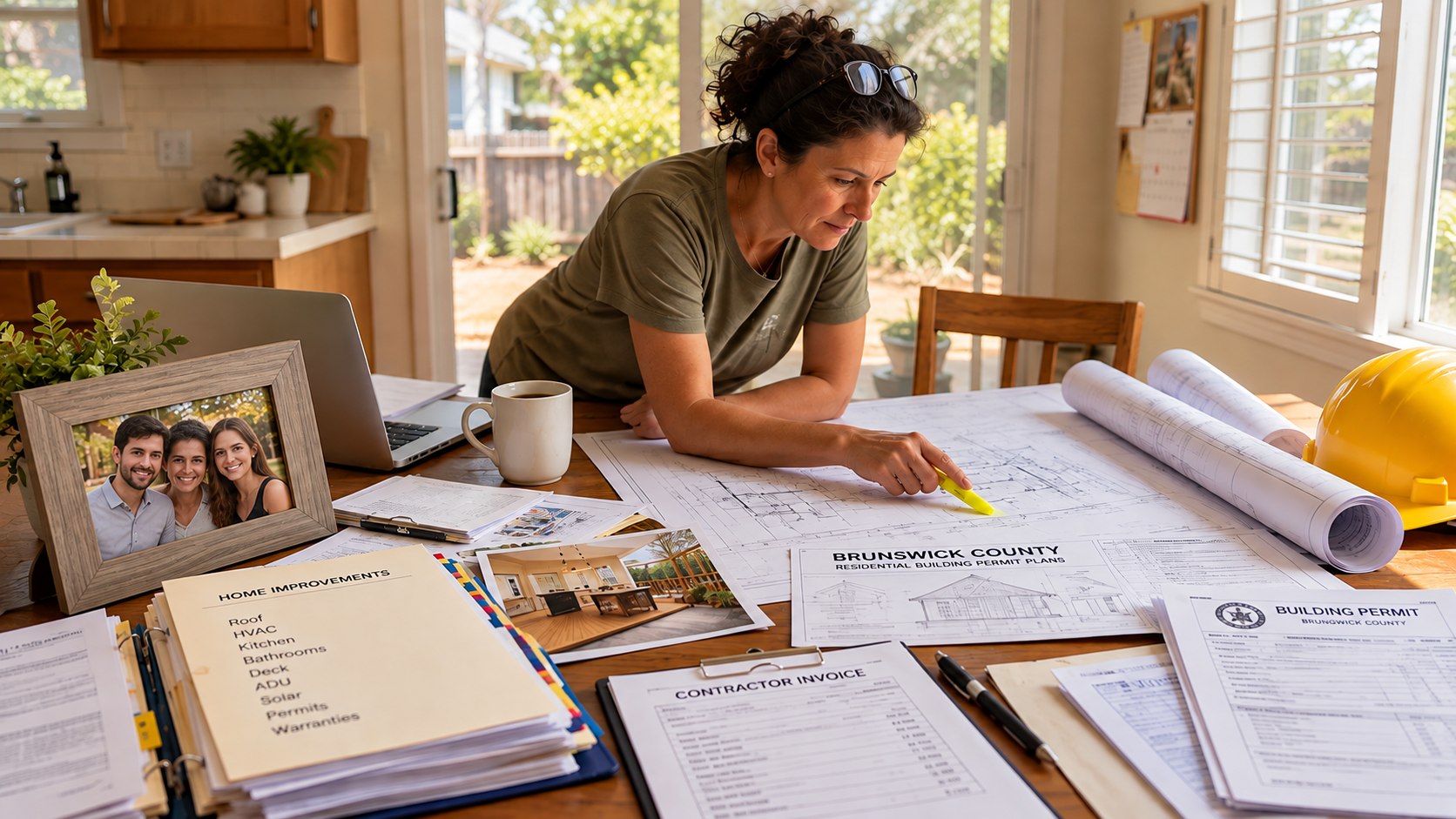
Your home has a story.
Maybe you replaced the roof five years ago. Updated the kitchen. Installed a new HVAC system. Added a deck, finished a room, or built an accessory dwelling unit (ADU).
The work may be completed but do you have documentation to show that it was properly permitted and completed?
That question is becoming more important now that the appraisal process is changing. With UAD 3.6, appraisals are moving toward a more detailed, structured picture of each property. For homeowners, that means providing information to substantiate the work, not just what someone can see during a visit. You may have no intent to sell your home for several years, however the records you keep today will likely be more important when that time does come. It is also important to recognize that when you do sell your home, the buyer may need more time to conduct their due diligence because of the amount of detail the appraiser will need to collect. A typical due diligence in Coastal NC is 21 days. Because of the new report forms, that time is expected to increase. You can help reduce that time line by building your story now.
If you're preparing to sell, don't wait until the appraisal is ordered to start gathering information. Create a simple property file—a physical binder or digital folder—that can help streamline the appraiser’s visit under current appraisal guidelines, including UAD 3.6, while also keeping important records organized for your Realtor, potential buyers and the closing process.
Start with the basics.
Gather your legal description, parcel information, property tax records and, when applicable, zoning and HOA documents.
Document the work you've done.
Create a dated list of major improvements—roof, HVAC, kitchen, bathrooms, additions and other significant projects. Include costs, completion dates, permits, contractor invoices, final sign-offs and warranties. This is consistent with the meeting discussion about giving the appraiser renovation information, costs, system ages, receipts and contractor documentation. Call Brunswick Country Central Permitting 910-253-2021 if you would like assistance confirming past permit filings.
Document special features.
If your home has an ADU ( Additional Dwelling Unit), solar system, pool, waterfront, outbuilding or energy-efficiency improvements, keep the relevant permits, agreements, maintenance records and other supporting documentation together.
Make the property accessible.
Clear pathways to the attic, crawlspace, basement, HVAC, water heater, electrical panel and other areas that need to be inspected. Make sure utilities are available and identify any incomplete or ongoing work before the appraisal.
Check the information your agent and the public have.
Review your MLS information and public records for discrepancies in square footage, rooms, levels, amenities and other property details. Correct factual errors before the appraisal when possible.
The goal isn't to tell the appraiser what your home is worth. It's to make sure the appraiser has accurate, relevant information and reasonable access to the property so the appraisal can be completed with a clear understanding of the home. The appraiser remains independent.
Your home has a story. The better you document it, the easier it is to tell.